快速开始
开始之前,请确保已安装 GreptimeDB。
本指南用 SQL 带你体验 GreptimeDB 的核心能力——从数据写入到 metrics、logs、traces 跨信号关联查询。SQL 同时也是 GreptimeDB 的管理入口,用于建表、设置 TTL 策略、配置索引等。
可以直接用现有工具写入数据,不需要手动建表(GreptimeDB 会自动建表):
继续阅读本指南,了解数据进来之后能做什么。
你将学到(10–15 分钟):
- 连接 GreptimeDB,创建 metrics、logs、traces 表
- 用 SQL 查询和聚合数据
- 全文索引关键词搜索日志
- 用 Range Query 计算时间窗口内的 p95 延迟
- 一条 SQL 关联 metrics、logs 和 traces
- SQL 和 PromQL 混合查询
连接 GreptimeDB
GreptimeDB 支持多种协议。本指南使用 SQL。
GreptimeDB 默认运行在 127.0.0.1,MySQL 协议端口 4002,PostgreSQL 协议端口 4003,连接方式:
mysql -h 127.0.0.1 -P 4002
或
psql -h 127.0.0.1 -p 4003 -d public
也可以用浏览器打开内置 Dashboard http://127.0.0.1:4000/dashboard,直接运行本指南中的所有 SQL。
默认未开启认证,连接时不需要用户名和密码。
建表
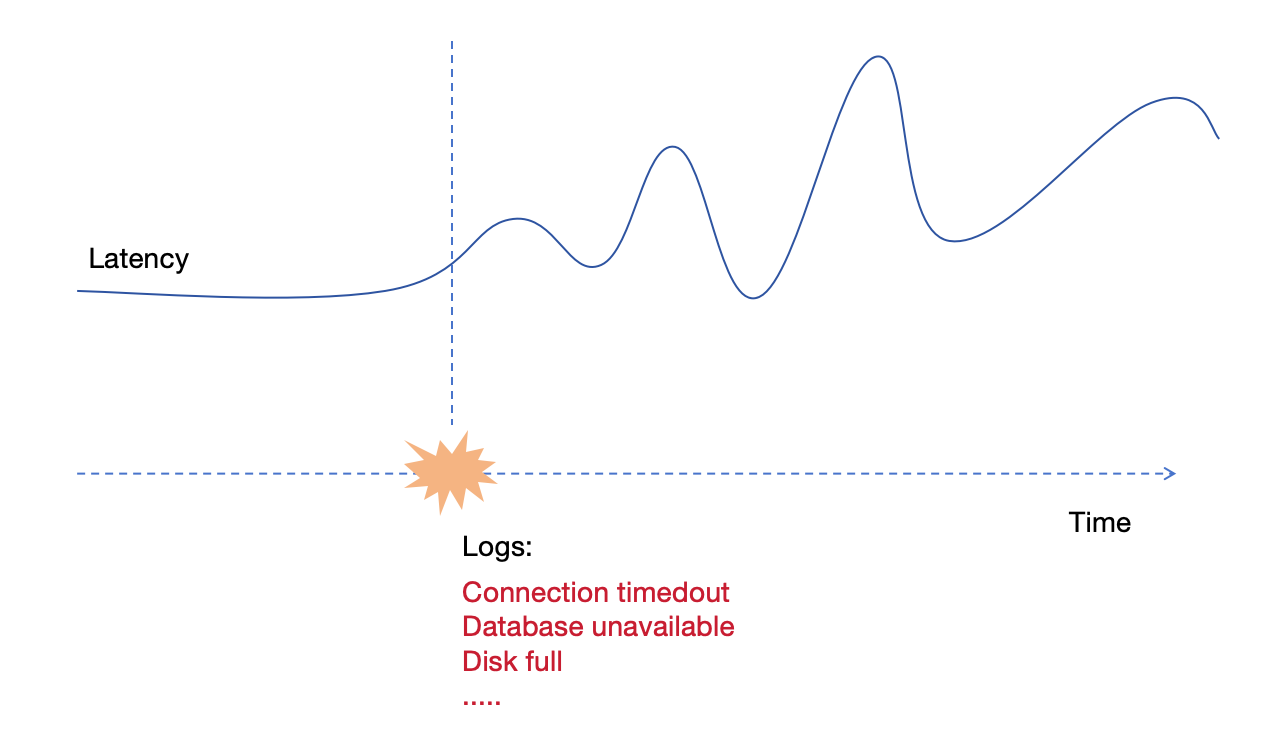
我们创建三张表模拟一个真实场景:gRPC 延迟指标、应用日志和请求链路。两台服务器 host1 和 host2 在采集数据,从 2024-07-11 20:00:10 开始,host1 出现异常。
Metrics 表
-- Metrics:gRPC 调用延迟(毫秒)
CREATE TABLE grpc_latencies (
  ts TIMESTAMP TIME INDEX,
  host STRING,
  method_name STRING,
  latency DOUBLE,
  PRIMARY KEY (host, method_name)
);
Logs 表
-- Logs:应用错误日志
CREATE TABLE app_logs (
  ts TIMESTAMP TIME INDEX,
  host STRING,
  api_path STRING,
  log_level STRING,
  log_msg STRING FULLTEXT INDEX WITH('case_sensitive' = 'false'),
  PRIMARY KEY (host, log_level)
) WITH ('append_mode'='true');
log_msg启用了全文索引,支持关键词搜索。append_mode针对日志场景优化(无去重开销)。
Traces 表
-- Traces:请求链路 Span
CREATE TABLE traces (
  ts TIMESTAMP TIME INDEX,
  trace_id STRING SKIPPING INDEX,
  span_id STRING,
  parent_span_id STRING,
  service_name STRING,
  operation STRING,
  duration DOUBLE,
  status_code INT,
  PRIMARY KEY (service_name)
) WITH ('append_mode'='true');
对于高基数的 trace_id 我们启用了跳数索引。
这里用 SQL 写入数据,所以需要手动建表。但 GreptimeDB 支持 Schemaless——通过 OpenTelemetry、Prometheus Remote Write、InfluxDB Line Protocol 等协议写入时,表会自动创建。
写入数据
插入模拟数据。20:00:10 之前两台主机都正常,之后 host1 开始出现延迟飙升。
正常阶段(20:00:10 之前)
INSERT INTO grpc_latencies (ts, host, method_name, latency) VALUES
  ('2024-07-11 20:00:06', 'host1', 'GetUser', 103.0),
  ('2024-07-11 20:00:06', 'host2', 'GetUser', 113.0),
  ('2024-07-11 20:00:07', 'host1', 'GetUser', 103.5),
  ('2024-07-11 20:00:07', 'host2', 'GetUser', 107.0),
  ('2024-07-11 20:00:08', 'host1', 'GetUser', 104.0),
  ('2024-07-11 20:00:08', 'host2', 'GetUser', 96.0),
  ('2024-07-11 20:00:09', 'host1', 'GetUser', 104.5),
  ('2024-07-11 20:00:09', 'host2', 'GetUser', 114.0);
异常阶段(20:00:10 之后)
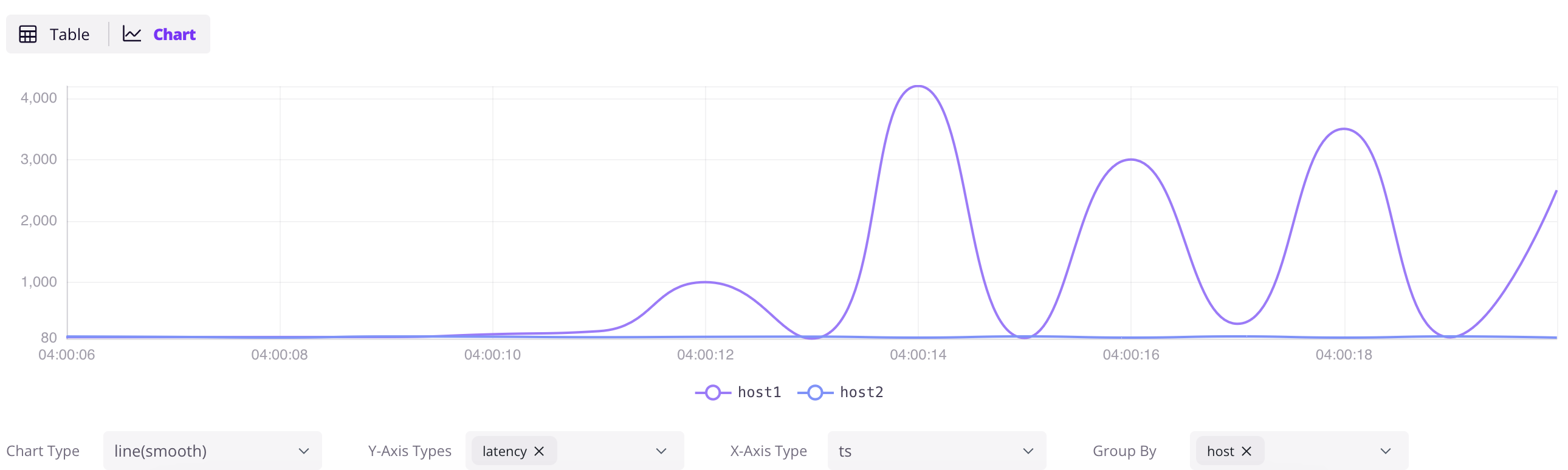
host1 延迟开始剧烈波动,偶尔飙到几千毫秒:
点击展开 INSERT 语句
INSERT INTO grpc_latencies (ts, host, method_name, latency) VALUES
  ('2024-07-11 20:00:10', 'host1', 'GetUser', 150.0),
  ('2024-07-11 20:00:10', 'host2', 'GetUser', 110.0),
  ('2024-07-11 20:00:11', 'host1', 'GetUser', 200.0),
  ('2024-07-11 20:00:11', 'host2', 'GetUser', 102.0),
  ('2024-07-11 20:00:12', 'host1', 'GetUser', 1000.0),
  ('2024-07-11 20:00:12', 'host2', 'GetUser', 108.0),
  ('2024-07-11 20:00:13', 'host1', 'GetUser', 80.0),
  ('2024-07-11 20:00:13', 'host2', 'GetUser', 111.0),
  ('2024-07-11 20:00:14', 'host1', 'GetUser', 4200.0),
  ('2024-07-11 20:00:14', 'host2', 'GetUser', 95.0),
  ('2024-07-11 20:00:15', 'host1', 'GetUser', 90.0),
  ('2024-07-11 20:00:15', 'host2', 'GetUser', 115.0),
  ('2024-07-11 20:00:16', 'host1', 'GetUser', 3000.0),
  ('2024-07-11 20:00:16', 'host2', 'GetUser', 95.0),
  ('2024-07-11 20:00:17', 'host1', 'GetUser', 320.0),
  ('2024-07-11 20:00:17', 'host2', 'GetUser', 115.0),
  ('2024-07-11 20:00:18', 'host1', 'GetUser', 3500.0),
  ('2024-07-11 20:00:18', 'host2', 'GetUser', 95.0),
  ('2024-07-11 20:00:19', 'host1', 'GetUser', 100.0),
  ('2024-07-11 20:00:19', 'host2', 'GetUser', 115.0),
  ('2024-07-11 20:00:20', 'host1', 'GetUser', 2500.0),
  ('2024-07-11 20:00:20', 'host2', 'GetUser', 95.0);
异常期间的错误日志
INSERT INTO app_logs (ts, host, api_path, log_level, log_msg) VALUES
  ('2024-07-11 20:00:10', 'host1', '/api/v1/resource', 'ERROR', 'Connection timeout'),
  ('2024-07-11 20:00:10', 'host1', '/api/v1/billings', 'ERROR', 'Connection timeout'),
  ('2024-07-11 20:00:11', 'host1', '/api/v1/resource', 'ERROR', 'Database unavailable'),
  ('2024-07-11 20:00:11', 'host1', '/api/v1/billings', 'ERROR', 'Database unavailable'),
  ('2024-07-11 20:00:12', 'host1', '/api/v1/resource', 'ERROR', 'Service overload'),
  ('2024-07-11 20:00:12', 'host1', '/api/v1/billings', 'ERROR', 'Service overload'),
  ('2024-07-11 20:00:13', 'host1', '/api/v1/resource', 'ERROR', 'Connection reset'),
  ('2024-07-11 20:00:13', 'host1', '/api/v1/billings', 'ERROR', 'Connection reset'),
  ('2024-07-11 20:00:14', 'host1', '/api/v1/resource', 'ERROR', 'Timeout'),
  ('2024-07-11 20:00:14', 'host1', '/api/v1/billings', 'ERROR', 'Timeout'),
  ('2024-07-11 20:00:15', 'host1', '/api/v1/resource', 'ERROR', 'Disk full'),
  ('2024-07-11 20:00:15', 'host1', '/api/v1/billings', 'ERROR', 'Disk full'),
  ('2024-07-11 20:00:16', 'host1', '/api/v1/resource', 'ERROR', 'Network issue'),
  ('2024-07-11 20:00:16', 'host1', '/api/v1/billings', 'ERROR', 'Network issue');
异常期间的 Trace Span
INSERT INTO traces (ts, trace_id, span_id, parent_span_id, service_name, operation, duration, status_code) VALUES
  ('2024-07-11 20:00:12', 'abc123', 'span1', '', 'host1', 'POST /api/v1/resource', 1050.0, 2),
  ('2024-07-11 20:00:12', 'abc123', 'span2', 'span1', 'host1', 'GetUser', 1000.0, 2),
  ('2024-07-11 20:00:14', 'def456', 'span3', '', 'host1', 'POST /api/v1/billings', 4250.0, 2),
  ('2024-07-11 20:00:14', 'def456', 'span4', 'span3', 'host1', 'CreateBilling', 4200.0, 2),
  ('2024-07-11 20:00:16', 'ghi789', 'span5', '', 'host1', 'POST /api/v1/resource', 3100.0, 2),
  ('2024-07-11 20:00:16', 'ghi789', 'span6', 'span5', 'host1', 'GetUser', 3000.0, 2),
  ('2024-07-11 20:00:12', 'jkl012', 'span7', '', 'host2', 'POST /api/v1/resource', 115.0, 0),
  ('2024-07-11 20:00:12', 'jkl012', 'span8', 'span7', 'host2', 'GetUser', 108.0, 0);
查询数据
按 Tag 和时间过滤
查询 host1 在 2024-07-11 20:00:15 之后的延迟:
SELECT *
FROM grpc_latencies
WHERE host = 'host1' AND ts > '2024-07-11 20:00:15';
+---------------------+-------+-------------+---------+
| ts                  | host  | method_name | latency |
+---------------------+-------+-------------+---------+
| 2024-07-11 20:00:16 | host1 | GetUser     |    3000 |
| 2024-07-11 20:00:17 | host1 | GetUser     |     320 |
| 2024-07-11 20:00:18 | host1 | GetUser     |    3500 |
| 2024-07-11 20:00:19 | host1 | GetUser     |     100 |
| 2024-07-11 20:00:20 | host1 | GetUser     |    2500 |
+---------------------+-------+-------------+---------+
5 rows in set (0.14 sec)
按 host 计算 p95 延迟:
SELECT
  host,
  approx_percentile_cont(0.95) WITHIN GROUP (ORDER BY latency) AS p95_latency
FROM grpc_latencies
WHERE ts >= '2024-07-11 20:00:10'
GROUP BY host;
+-------+-------------------+
| host  | p95_latency       |
+-------+-------------------+
| host1 | 4164.999999999999 |
| host2 |               115 |
+-------+-------------------+
2 rows in set (0.11 sec)
全文搜索日志
@@ 操作符用于全文搜索:
SELECT *
FROM app_logs
WHERE lower(log_msg) @@ 'timeout'
  AND ts > '2024-07-11 20:00:00'
ORDER BY ts;
+---------------------+-------+------------------+-----------+--------------------+
| ts                  | host  | api_path         | log_level | log_msg            |
+---------------------+-------+------------------+-----------+--------------------+
| 2024-07-11 20:00:10 | host1 | /api/v1/billings | ERROR     | Connection timeout |
| 2024-07-11 20:00:10 | host1 | /api/v1/resource | ERROR     | Connection timeout |
| 2024-07-11 20:00:14 | host1 | /api/v1/billings | ERROR     | Timeout            |
| 2024-07-11 20:00:14 | host1 | /api/v1/resource | ERROR     | Timeout            |
+---------------------+-------+------------------+-----------+--------------------+
Range Query
用 Range Query 计算 5 秒窗口内的 p95 延迟:
SELECT
  ts,
  host,
  approx_percentile_cont(0.95) WITHIN GROUP (ORDER BY latency)
    RANGE '5s' AS p95_latency
FROM grpc_latencies
ALIGN '5s' FILL PREV
ORDER BY host, ts;
+---------------------+-------+-------------+
| ts                  | host  | p95_latency |
+---------------------+-------+-------------+
| 2024-07-11 20:00:05 | host1 |       104.5 |
| 2024-07-11 20:00:10 | host1 |        4200 |
| 2024-07-11 20:00:15 | host1 |        3500 |
| 2024-07-11 20:00:20 | host1 |        2500 |
| 2024-07-11 20:00:05 | host2 |         114 |
| 2024-07-11 20:00:10 | host2 |         111 |
| 2024-07-11 20:00:15 | host2 |         115 |
| 2024-07-11 20:00:20 | host2 |          95 |
+---------------------+-------+-------------+
8 rows in set (0.06 sec)
Range Query 是 GreptimeDB 做时间窗口聚合的利器,详见文档。
关联 Metrics、Logs 和 Traces
统一数据库的真正威力在这里。一条查询同时关联 p95 延迟、错误日志数和慢 Trace Span——跨三种信号类型:
WITH
  -- Metrics:按 host 计算 5 秒窗口的 p95 延迟
  metrics AS (
    SELECT
      ts, host,
      approx_percentile_cont(0.95) WITHIN GROUP (ORDER BY latency)
        RANGE '5s' AS p95_latency
    FROM grpc_latencies
    ALIGN '5s' FILL PREV
  ),
  -- Logs:按 host 统计 5 秒窗口的 ERROR 数
  logs AS (
    SELECT
      ts, host,
      count(log_msg) RANGE '5s' AS num_errors
    FROM app_logs
    WHERE log_level = 'ERROR'
    ALIGN '5s'
  ),
  -- Traces:按 host 统计 5 秒窗口的慢 Span
  slow_traces AS (
    SELECT
      date_bin(INTERVAL '5' seconds, ts) AS ts,
      service_name AS host,
      COUNT(*) AS slow_spans,
      MAX(duration) AS max_span_duration
    FROM traces
    WHERE duration > 500
    GROUP BY date_bin(INTERVAL '5' seconds, ts), service_name
  )
SELECT
  m.ts,
  m.host,
  m.p95_latency,
  COALESCE(l.num_errors, 0) AS num_errors,
  COALESCE(t.slow_spans, 0) AS slow_spans,
  t.max_span_duration
FROM metrics m
LEFT JOIN logs l ON m.host = l.host AND m.ts = l.ts
LEFT JOIN slow_traces t ON m.host = t.host AND m.ts = t.ts
ORDER BY m.ts, m.host;
+---------------------+-------+-------------+------------+------------+-------------------+
| ts                  | host  | p95_latency | num_errors | slow_spans | max_span_duration |
+---------------------+-------+-------------+------------+------------+-------------------+
| 2024-07-11 20:00:05 | host1 |       104.5 |          0 |          0 |              NULL |
| 2024-07-11 20:00:05 | host2 |         114 |          0 |          0 |              NULL |
| 2024-07-11 20:00:10 | host1 |        4200 |         10 |          4 |              4250 |
| 2024-07-11 20:00:10 | host2 |         111 |          0 |          0 |              NULL |
| 2024-07-11 20:00:15 | host1 |        3500 |          4 |          2 |              3100 |
| 2024-07-11 20:00:15 | host2 |         115 |          0 |          0 |              NULL |
| 2024-07-11 20:00:20 | host1 |        2500 |          0 |          0 |              NULL |
| 2024-07-11 20:00:20 | host2 |          95 |          0 |          0 |              NULL |
+---------------------+-------+-------------+------------+------------+-------------------+
8 rows in set (0.02 sec)
结论很清晰:20:00:10 – 20:00:15 窗口内,host1 的 p95 延迟飙到 4200ms,出现 10 条错误日志,4 个慢 Span(最慢 4250ms)。host2 全程正常。 在传统三支柱架构下,这个关联分析需要在 Prometheus、Loki、Jaeger 之间来回切换。用 GreptimeDB,一条查询搞定。
用 PromQL 查询
GreptimeDB 原生支持 PromQL。在 Dashboard 切到 PromQL tab,运行:
quantile_over_time(0.95, grpc_latencies{host!=""}[5s])
也可以通过 Prometheus 兼容的 HTTP API 查询:
curl -X POST \
  -H 'Authorization: Basic <base64-encoded-credentials>' \
  --data-urlencode 'query=quantile_over_time(0.95, grpc_latencies{host!=""}[5s])' \
  --data-urlencode 'start=2024-07-11 20:00:00Z' \
  --data-urlencode 'end=2024-07-11 20:00:20Z' \
  --data-urlencode 'step=15s' \
  'http://localhost:4000/v1/prometheus/api/v1/query_range'
返回结果
{
  "status": "success",
  "data": {
    "resultType": "matrix",
    "result": [
      {
        "metric": {
          "__name__": "grpc_latencies",
          "host": "host1",
          "method_name": "GetUser"
        },
        "values": [
          [
            1720728015.0,
            "3560"
          ]
        ]
      },
      {
        "metric": {
          "__name__": "grpc_latencies",
          "host": "host2",
          "method_name": "GetUser"
        },
        "values": [
          [
            1720728015.0,
            "114.2"
          ]
        ]
      }
    ]
  }
}
SQL + PromQL 混合查询
用 TQL 在 SQL 里嵌入 PromQL:
TQL EVAL ('2024-07-11 20:00:00Z', '2024-07-11 20:00:20Z', '15s')
    quantile_over_time(0.95, grpc_latencies{host!=""}[5s]);
+---------------------+---------------------------------------------------------+-------+-------------+
| ts                  | prom_quantile_over_time(ts_range,latency,Float64(0.95)) | host  | method_name |
+---------------------+---------------------------------------------------------+-------+-------------+
| 2024-07-11 20:00:15 |                                                    3560 | host1 | GetUser     |
| 2024-07-11 20:00:15 |                                                   114.2 | host2 | GetUser     |
+---------------------+---------------------------------------------------------+-------+-------------+
还可以把 PromQL 作为 CTE 用在关联查询里:
WITH
  metrics AS (
    TQL EVAL ('2024-07-11 20:00:00Z', '2024-07-11 20:00:20Z', '5s')
      quantile_over_time(0.95, grpc_latencies{host!=""}[5s])
  ),
  logs AS (
    SELECT
      ts, host,
      COUNT(log_msg) RANGE '5s' AS num_errors
    FROM app_logs
    WHERE log_level = 'ERROR'
    ALIGN '5s'
  )
SELECT
  m.*,
  COALESCE(l.num_errors, 0) AS num_errors
FROM metrics AS m
LEFT JOIN logs AS l ON m.host = l.host AND m.ts = l.ts
ORDER BY m.ts, m.host;
+---------------------+---------------------------------------------------------+-------+-------------+------------+
| ts                  | prom_quantile_over_time(ts_range,latency,Float64(0.95)) | host  | method_name | num_errors |
+---------------------+---------------------------------------------------------+-------+-------------+------------+
| 2024-07-11 20:00:10 |                                      140.89999999999998 | host1 | GetUser     |         10 |
| 2024-07-11 20:00:10 |                                                   113.8 | host2 | GetUser     |          0 |
| 2024-07-11 20:00:15 |                                                    3560 | host1 | GetUser     |          4 |
| 2024-07-11 20:00:15 |                                                   114.2 | host2 | GetUser     |          0 |
| 2024-07-11 20:00:20 |                                                    3400 | host1 | GetUser     |          0 |
| 2024-07-11 20:00:20 |                                                     115 | host2 | GetUser     |          0 |
+---------------------+---------------------------------------------------------+-------+-------------+------------+
GreptimeDB Dashboard
GreptimeDB 内置 控制台,地址为 http://localhost:4000/dashboard。Table Query 是通用查询入口(支持 SQL 和 PromQL),也可切换到 Metrics Query、Logs Query 和 Traces Query 使用专用视图。
SELECT * FROM grpc_latencies;
下一步
接入现有栈:
- Prometheus Remote Write — 把 Prometheus 指向 GreptimeDB
- OpenTelemetry — 配置 OTel Collector 发送 metrics、logs、traces
- Jaeger — 用 GreptimeDB 作为 Jaeger 的存储后端
- Loki — 用 Loki 协议发送日志
- Elasticsearch — 用 Elasticsearch
_bulkAPI 发送日志、traces 和事件 - 查看所有写入方式
可视化和监控:
- Grafana 集成 — 用 SQL 或 PromQL 数据源连接 Grafana
- 内置 Dashboard —
http://localhost:4000/dashboard
深入了解:
- 为什么选择 GreptimeDB — 架构、成本对比、竞品比较
- Observability 2.0 与宽事件 — 宽事件的适用场景和成本
- Demo 场景 — 更多动手示例
- 用户指南 — 完整参考